
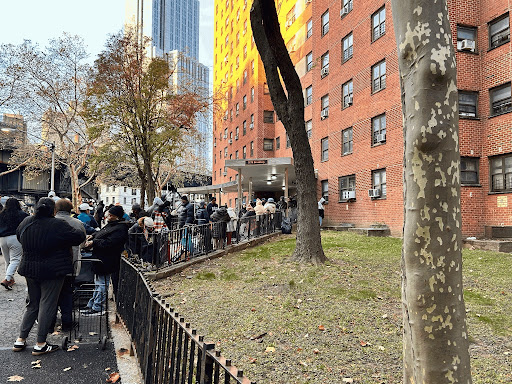
Under the shadow of the IRT Broadway Line Viaduct, where trains hum overhead and buses shake the pavement, a long line forms outside 3170 Broadway every Wednesday afternoon.
Grant Houses, a complex of 10 buildings standing 20 stories high, is home to approximately 4,500 residents across more than 1,940 units.
Outside the complex, tenants grip carts, strollers, and reusable bags, waiting for the Grant Food Pantry to open its door. It takes a team to help this building run like a small neighborhood.
“This pantry is a blessing,” said Nancy Morales. “When they took away the SNAP benefits, how are we supposed to pay for necessities?”
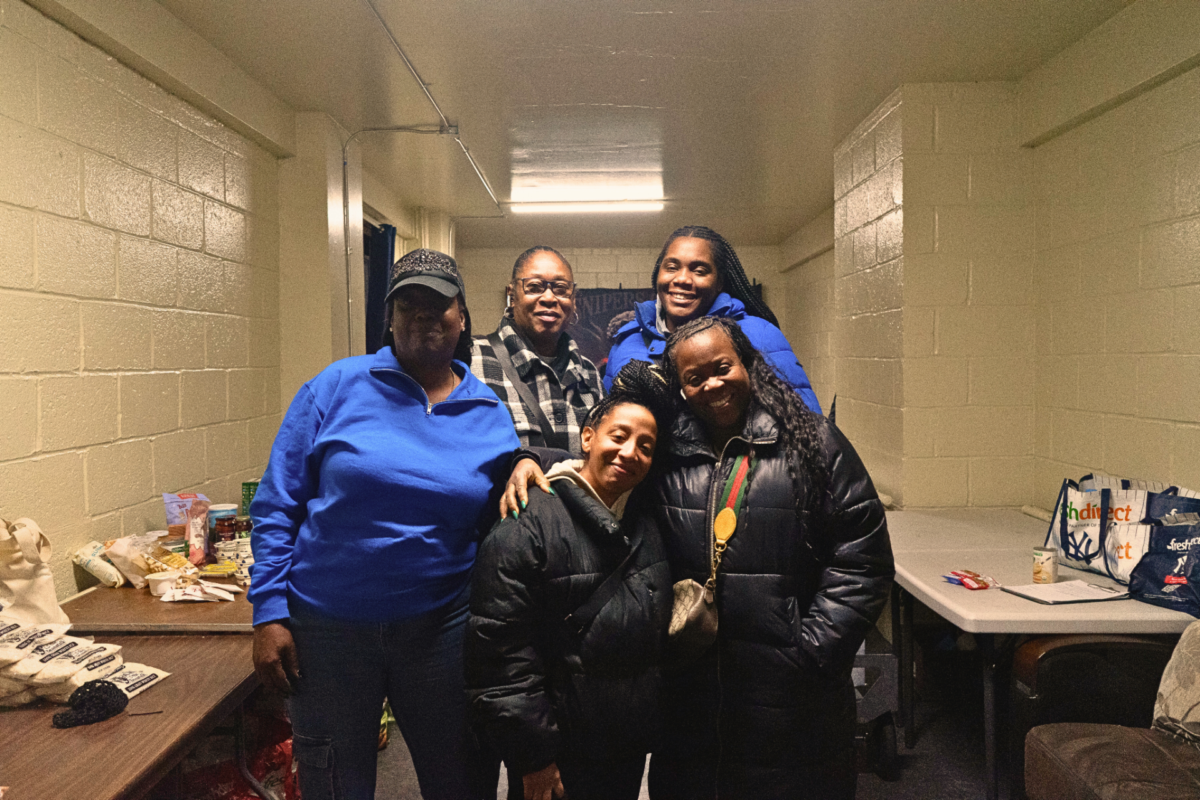
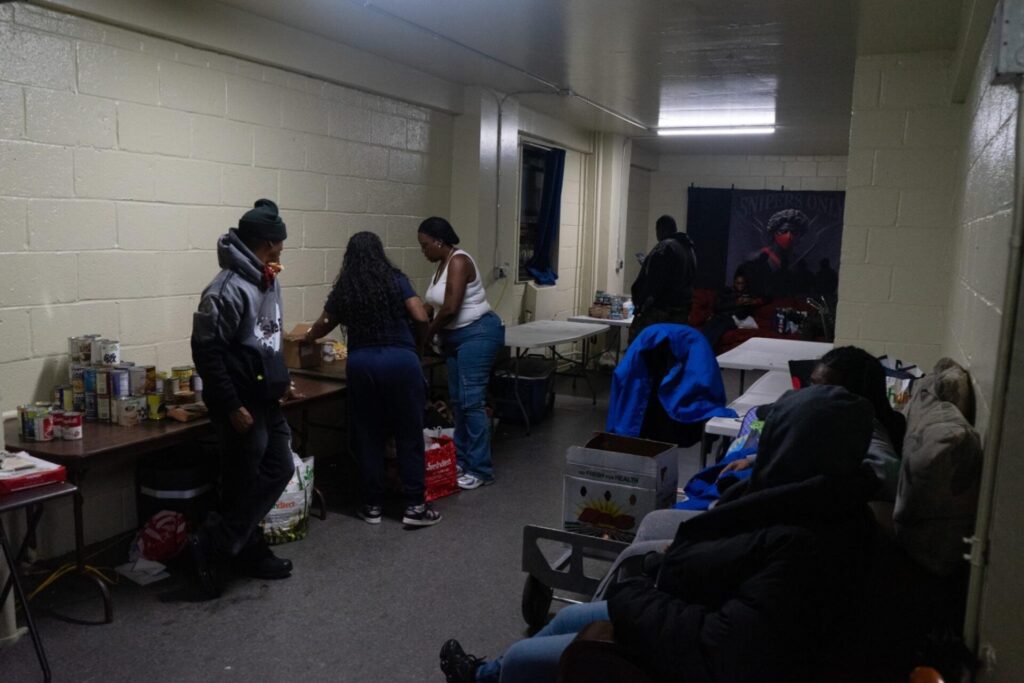
Inside, Chebella Hayward, 57, moves through the tenant association room with steady purpose and a commanding presence.
The council team and volunteers follow her cues as she calls out instructions, checks for items, and keeps the line moving.
For many residents, she has become the backbone of the building’s food and communication support system.
As grocery costs continue to rise and SNAP benefits shrink, New Yorkers are turning to local, resident-run pantries to survive as the need for food becomes a necessity.
With eight million people and rising costs, food pantries are seeing a surge in population. Grant Houses, home to thousands of low-income families and seniors, feels the pressure sharply.
Hayward’s food pantry shows how community members are filling urgent gaps in the city’s shoes where the help is overlooked — often without the funding or recognition they deserve.
A growing line and growing need
Since 2023, the food pantry has seen radical growth in the amount of people showing up.
According to Hayward, the pantry has changed dramatically in just a year.
“It changed — we used to serve 40 to 45 people, max,” she said. “Now it’s 75. Since [President] Trump came into office, with these tariffs and everything going up, it’s been 5 to 10 new people a week.”
Residents said they have seen the demand continue to grow.
“There’s more and more people now,” Morales said. “Everybody’s struggling.”
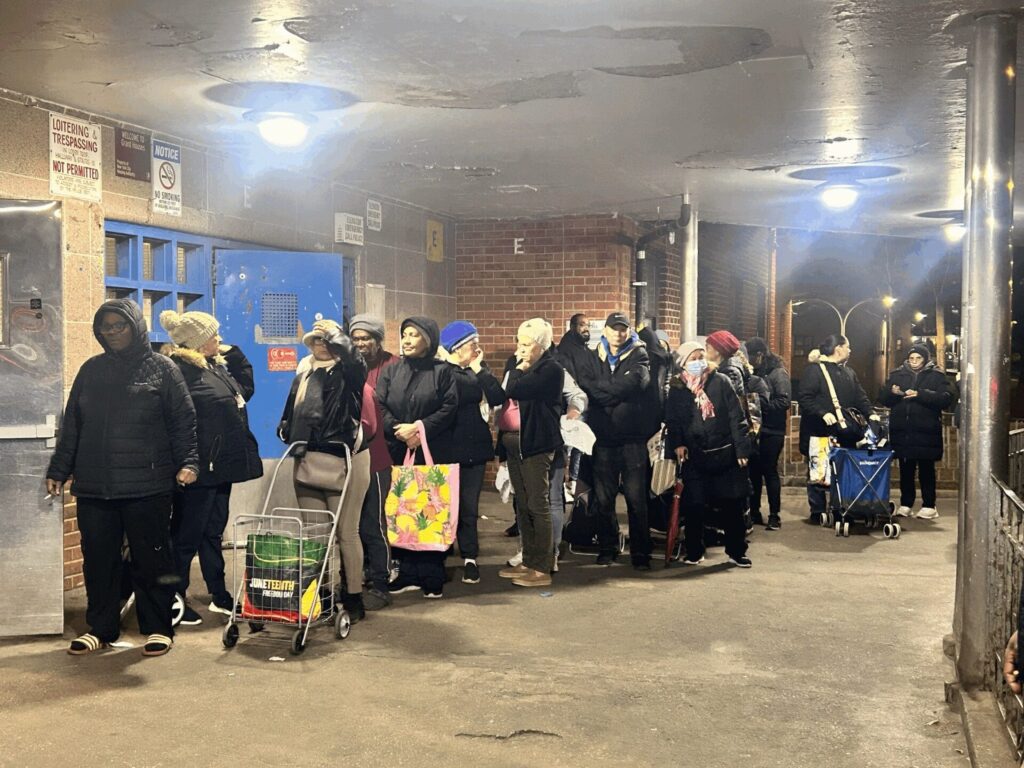
As distribution time draws near, the line nearly doubles in size. On some days, tensions flare among those waiting.
“I wanted to feed my community, but it became stressful,” Hayward said. “Some people become entitled instead of appreciative.”
Why she keeps going
Despite the challenges, Hayward stays grounded in her purpose and there’s a drive to come through on the mission she started.
“I like to cook and I like to see people eat,” she said. “If this can take a little ease off your pocket, why not? Why can’t it be right here in our community?”
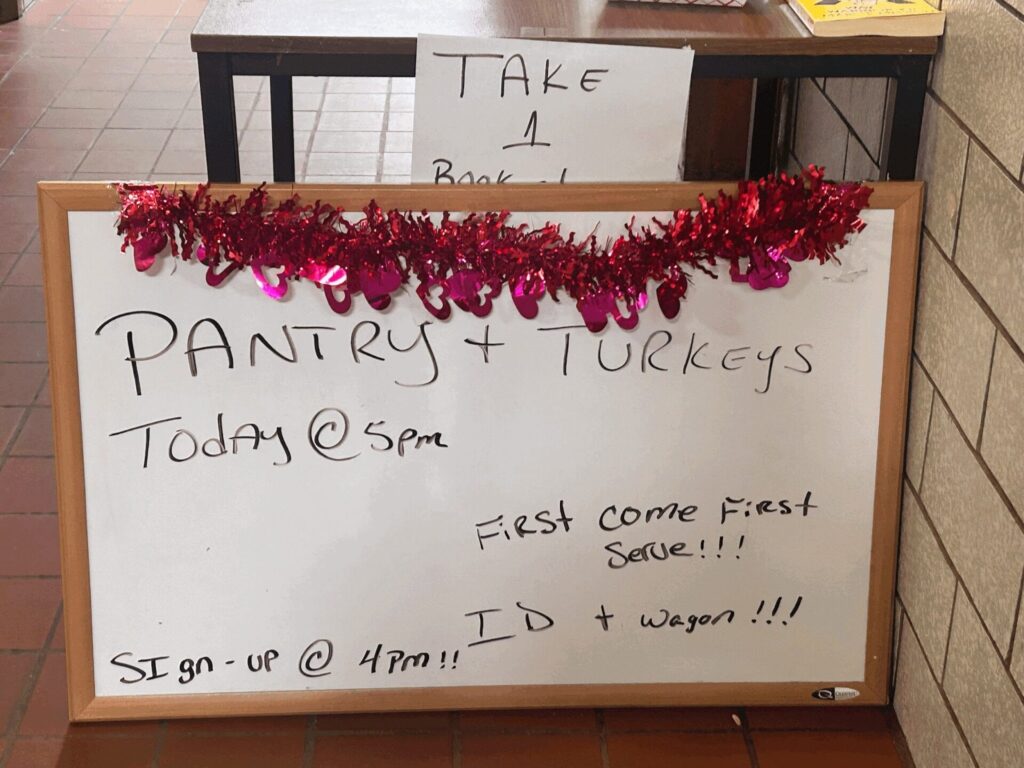
She schedules distribution later in the afternoon to help people who work or cannot make the times the pantry operates.
“If it’s seniors who can’t make it, I’ll make a bag and deliver it,” she said.
Behind the scenes of Wednesday distribution
The food pantry starts well before names get taken down. Hayward’s day begins as early as 2 a.m.
“When I get up, I text the guy who does the deliveries: Is it large or small? So I know how much help I need,” she said.
On a good day, the truck pulls in by 2:30 p.m. Other days, delays push the arrival time back.
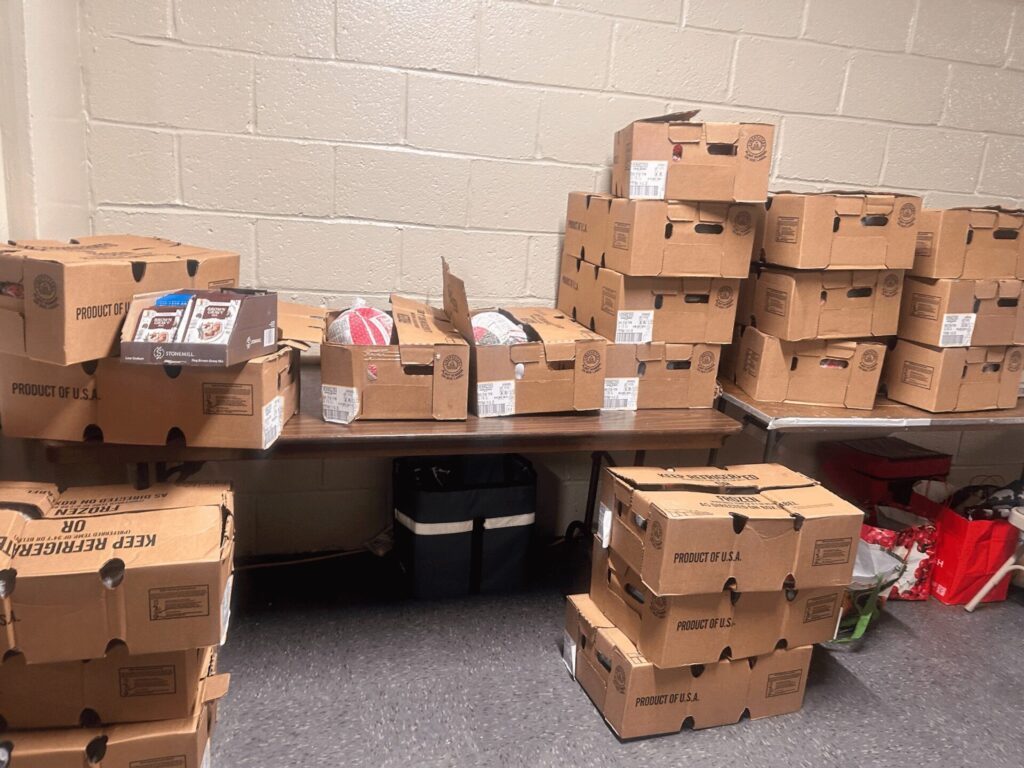
“We unload, pack the bags, and wait for people to line up,” she explained.
As the line grows longer throughout the day, the team works quickly to fill bags with canned goods, fresh produce, and meat before loading them into shopping carts for distribution.
“We start giving out bags around five, and after that — done. We go home,” she said. “One of the youngest helpers we have is [age] 12.”
A Pantry That Fills a Need NYCHA Won’t
The New York City Housing Authority, or NYCHA, has over 335 public housing complexes that help house more than 500,000 residents across the five boroughs. As city administrations have come and gone, residents say reliable support from agencies like NYCHA has often been difficult to find.
Across NYCHA’s public housing developments, The Bridge found fewer than five food pantries operating on-site. While hundreds of food pantries are listed citywide, there is no publicly available data showing how many operate within public housing developments.
Hayward says running a food pantry inside public housing comes with limits.
“I try to ask for donations, anything fun for our community,” she said. “NYCHA doesn’t pay for the fun.”
Support from outside
Hayward said local partnerships keep the pantry afloat.
“We work with the co-op community across the street, Neighbors for a Greener Harlem, they find grants, they have donated to our food pantry,” she said.
“Columbia University works with us,” she added. “They gave us 100 turkey tickets [for Thanksgiving Day], donations for Family Day, free tutoring, even OSHA classes for residents to get local certification.”
She keeps her focus local. The food pantry for the moment is only available to residents situated in Grant Houses, only having the qualification of just living there with proof of ID. This allows the team to control the amount of food they are able to give out to people who need.
She says she is serving a New York City community facing food insecurity that has long been overlooked by both residents and public officials.
“I haven’t connected with other pantries,” she said. “I’m not trying to fill your cabinets — I just wanna put something in it. You don’t take more than you need.”
Holding onto community through change
“When I was younger, we were raised in a community,” she said. “Families were a community. It’s what I want to see again.”
Hayward has lived in Grant Houses for 53 years, giving her a firsthand view of changes she says have eroded the community’s sense of connection.
“The community stopped,” she said. “It became a competition. Fake love is a better way to describe it.”
Still, she and the council team wake up, show up every Wednesday, ensuring no one is left behind.
“I hope that when I’m gone — moved or deceased — someone will carry this on,” she said. “There will always be a need. For the seniors, for the middle-aged, for everybody. Just love your community. Fed up and all.”

